What Are The Circuit Protection Devices? (一)
May 09, 2025
Leave a message
What are the circuit protection devices? (一)
1. Fuse
Working principle: When the current passes through the fuse element, it heats up due to its own resistance. When the current exceeds a certain value and lasts for a certain period of time, the temperature of the fuse element rises to the melting point and it will melt, thereby cutting off the circuit, preventing the fault from expanding and avoiding dangers such as fire.
Application scenarios: Widely used in various circuits, especially simple circuits that do not require high overload and short-circuit protection, such as home lighting circuits and circuits of some small electrical equipment.
2. Circuit breaker
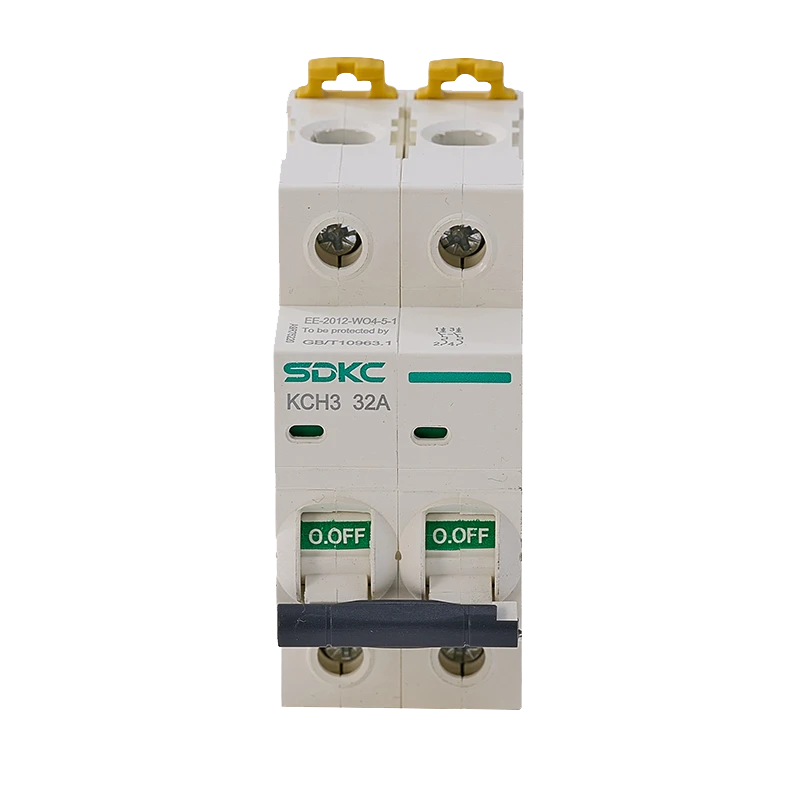
Working principle: When an overload, short circuit or other abnormal situation occurs in the circuit, the tripping mechanism inside the circuit breaker will act, causing the circuit breaker contacts to disconnect quickly and cut off the circuit. The circuit breaker can be reused, and the circuit power supply can be restored by reclosing the circuit after the fault is eliminated.
Application scenarios: Applicable to almost all types of circuits, from home, business to industry. For example, the distribution box in the home usually installs a small circuit breaker to protect each branch circuit; in industrial production, large circuit breakers are used to protect complex power systems and equipment.
3. Surge protector
Working principle: When a momentary high voltage surge occurs in the circuit (such as transient overvoltage caused by lightning induction, grid switching, etc.), the surge protector can be turned on in a very short time to discharge the surge current to the ground, thereby protecting the back-end equipment from the impact of the surge voltage. Surge protectors are usually composed of gas discharge tubes, varistors, transient suppression diodes and other components.
Application scenarios: Mainly used to protect voltage-sensitive electronic equipment and systems, such as computer network systems, communication equipment, security monitoring systems, industrial automation control systems, etc. The application of surge protectors is particularly important in areas prone to lightning or places where large electrical equipment is frequently started and stopped.
4. Overvoltage protector
Working principle: When the voltage in the circuit exceeds the set threshold, the overvoltage protector will act quickly to cut off the circuit or limit the voltage to protect the equipment in the circuit from damage caused by excessive voltage. Overvoltage protectors usually use electronic components or special circuit structures to monitor and control voltage.
Application scenarios: Widely used in electronic equipment, communication equipment, precision instruments and other circuits that require high voltage stability. For example, in computer rooms, communication base stations, laboratories and other places, overvoltage protectors are usually installed to prevent overvoltage damage to equipment caused by grid voltage fluctuations or lightning.