



Our professional technical team provides you with technical support services. Our design and manufacturing meet various control requirements, and always put safety, reliability, energy saving, and long life first. The diverse product selection can meet the needs of various installation sizes and technical characteristics, and meet the application needs of customers with its flexibility.
The SDKC technical team tests and debugs the assembled contactors to ensure that its performance meets the design requirements. This process usually includes insulation testing, withstand voltage testing, and switching capacity testing. The debugged contactors are packaged, marked with model, specifications, quality and other information for easy storage, transportation and sales.
We welcome customers and partners around the world to contact us to explore potential business opportunities and cooperation methods. We look forward to establishing a win-win relationship with you.
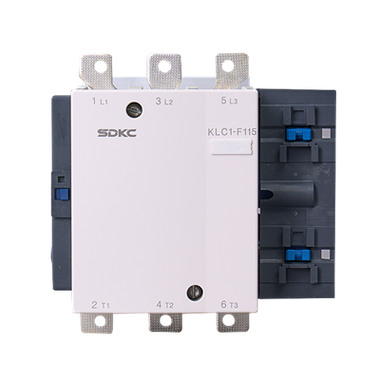

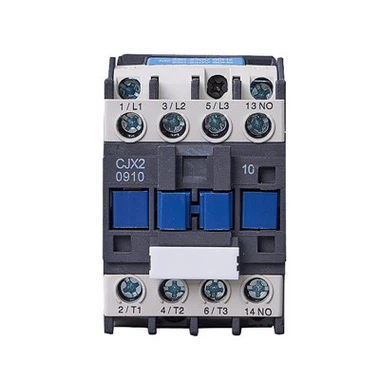

Benefits of Contactor
Switching frequency
One of the key functions of an contactor is its ability to open and close electrical wires frequently and reliably. Unlike manual opening and closing circuits,contactors operate using an electromagnetic field pull-in mechanism. This feature ensures greater efficiency and flexibility, allowing the contactor to meet the needs of complex electrical systems.
Large current control
Contactors have the unique ability to control large current loads with small currents. This attribute makes them indispensable when handling heavy electrical equipment in a variety of industrial, commercial and residential environments. contactors prevent equipment damage and the risk of electrical failures by effectively controlling current, ensuring the safe operation of connected equipment.
Overload protection
When used in conjunction with thermal relays, contactors provide an extra layer of protection against equipment overload. When the connected load exceeds the rated capacity, the thermal relay detects excessive temperature rise and triggers the contactor to disconnect the power supply. This mechanism protects connected devices from potential damage caused by prolonged overload.
Simultaneous control of multiple load lines
AC contactors have the ability to open and close multiple load lines simultaneously. This feature makes them efficient and ideal for applications where multiple devices or systems need to be controlled simultaneously. By simplifying the control process, contactors save time and effort and minimize the complexity of managing large numbers of load lines individually.
Knife Blade Switch
It is the oldest type of contactors and uses ON and OFF electric motors. The knife blade switch consisted of a strip and a lever. The lever serves to pull the metal strip up and down, making this contactor a manual operation.
Manual Contactor
This contactor was a replacement and improvement on the knife blade switch. It, however, still features manual operation.
Double break contacts, which can open the circuit in two places simultaneously, providing more current in smaller spaces.
Magnetic Contactor
This is the latest contactor design and is the most advanced of them all. It is commonly used in industrial applications due to its features like.

The contactor consists of two iron cores, where one is fixed and the other one is the movable coil and it is an insulated copper coil. Where the copper coil is located on the fixed core. There are six main contacts for power connection, where three are fixed cores and the other three are movable cores. These contacts are made from pure copper, and the contact points are made from special alloy to withstand high starting current and temperature. A spring which is located between coil and the movable core, auxiliary contacts it could be normally open or closed. The main contacts cut on and off the light current loads such as contactors coil, relays, timers, and many other control circuit parts are linked to contact mechanism. A three-phase AC power supply provided to the circuit which is shown below,It consists of three main parts they are.
Coil
It provides a force which is required to close the contact. The coil is also named as an electromagnet. An enclosure is used to safeguard the coil and contactor.
Enclosure
It acts like an insulator and protector, which protects the circuit form any electrical contact, dust, oil, etc. They are made up of different materials like Nylon 6, Bakelite, Thermosetting plastic, etc.
Contacts
The main function of this is that it carries the current to various parts of the circuit. There are classified into contact springs, axillary contacts, and power contacts. Where each of the contacts has its own functions, which is explained in principle of operation of the contactor.
The Difference Between Selecting Contactors And Relays

Although we have already stated that contactors are used for higher power applications than relays, understanding the full technical differences between contactor vs relay is slightly more complex.
Load capacity
Contactors are designed and built to handle much higher power switching applications than control relays. Relays are typically reserved for use with loads of around 5A-15A, and they are most often rated for 10A or less.
Contact standards
Contactors are almost always set up in a normally open (NO) configuration. This means that the circuit will only be established while the electromagnet in the contactor is receiving current. Relays are easy to find with both NO and NC contacts.
Protections and safety features
Contactors typically offer a much wider range of safety cut-offs and protections, reflecting the fact that they are designed for higher power applications.
FAQ
We're well-known as one of the leading contactor manufacturers and suppliers in China. Please feel free to buy high quality contactor at competitive price from our factory. For customized service, contact us now.